Questions
The honest answers.
Is this only for people over 40?
No. The app is built to make better decisions than you would at 6am with a coffee in your
hand, and that's worth as much at 22 as at 62. Same progression engine, same plate maths,
same six environments, same streaks.
There's nothing to opt into: put in your real age and the plan tunes itself to it. Every
movement is graded for joint and lower-back risk, so once it knows what it's working with, the
risky ones simply stop being offered, replaced by a named alternative that trains the same
muscle. Load jumps get halved so tendons keep up, rest goes up, blocks deload sooner. Tell it a
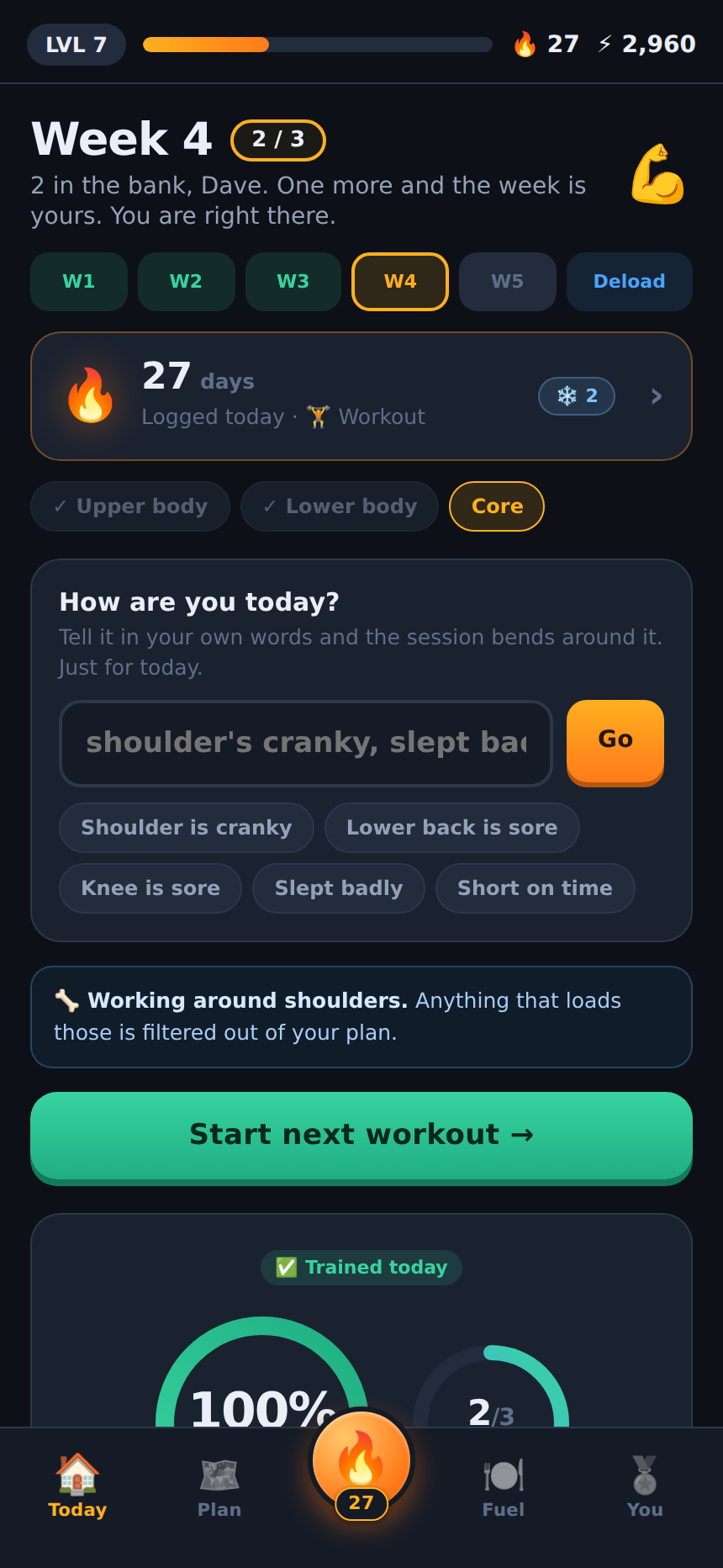
shoulder or a lower back is a problem and it filters overhead pressing or loaded spinal flexion
specifically, and reshapes the week around it.
At 22 that's the full library and standard progression. At 60 it's a program that assumes
nothing and protects connective tissue. Same app reading the number you gave it, and every
decision it makes is visible in Settings and yours to overrule.
I've got a bad back / dodgy shoulder. Can I use it?
That's the case it was built for. You tell it which joints are a problem and it filters loaded
spinal flexion, unsupported bent-over work, overhead pressing, whatever applies, and offers a
named alternative rather than just hiding things. It is not medical advice, and the app says so
before you train: if something hurts, stop, and talk to your doctor before starting. The
guide on lifting with a bad shoulder walks
through the swaps it makes.
What does it cost?
The web version is free, and there'll always be a free tier you can train on indefinitely. Pro is
$4.99 a month, or $29.99 for a year (about $2.50/mo), a fraction of what the periodisation
apps charge, and you get the whole app free for 7 days first, so you feel it working
before you decide. You can subscribe on iPhone or right here on the web, and there's a launch-only Founding Lifter deal: $99.99 once for lifetime access, first 150 people only.
Until December 31, Pro annual on the web has a founding price: $24.99 a year, and you keep that price for as long as you stay subscribed.
What's in the free version?
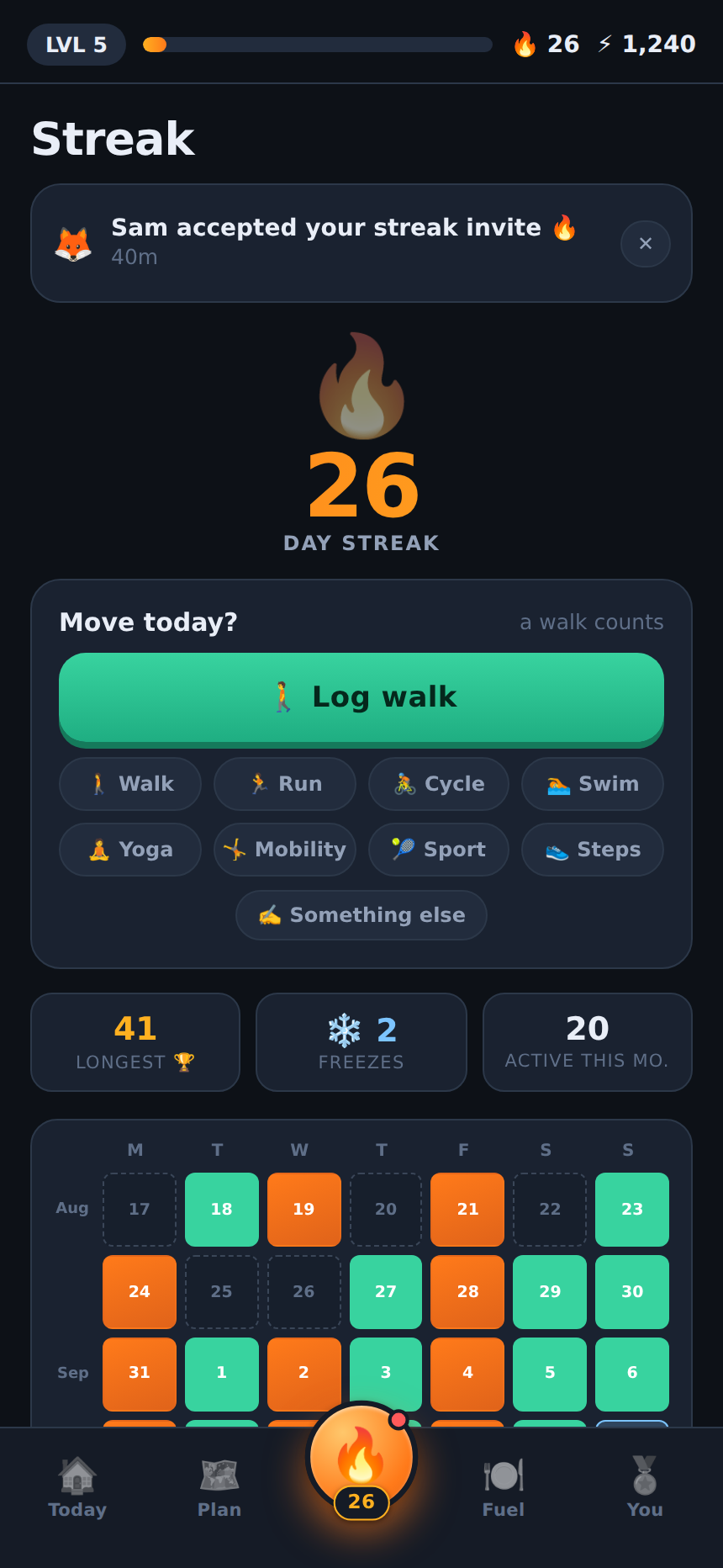
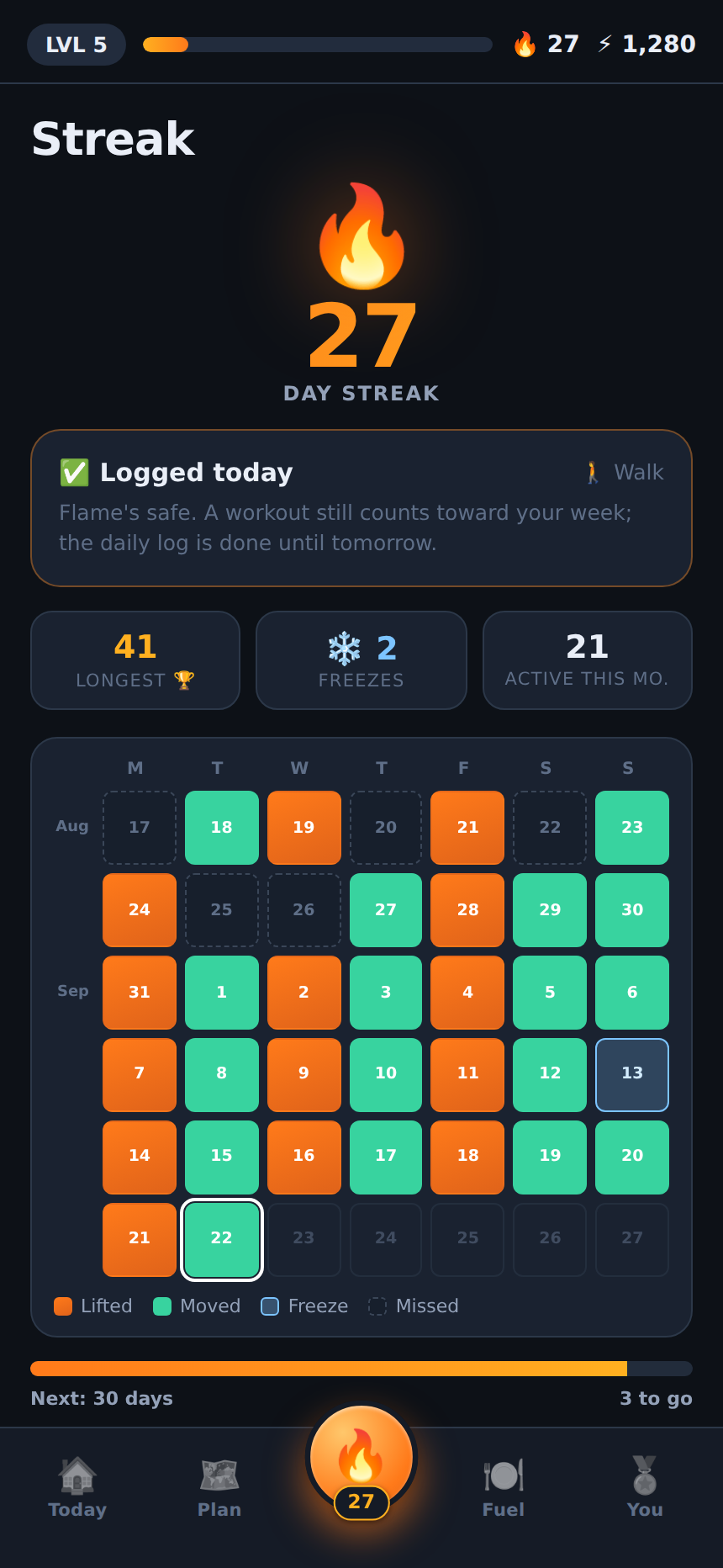
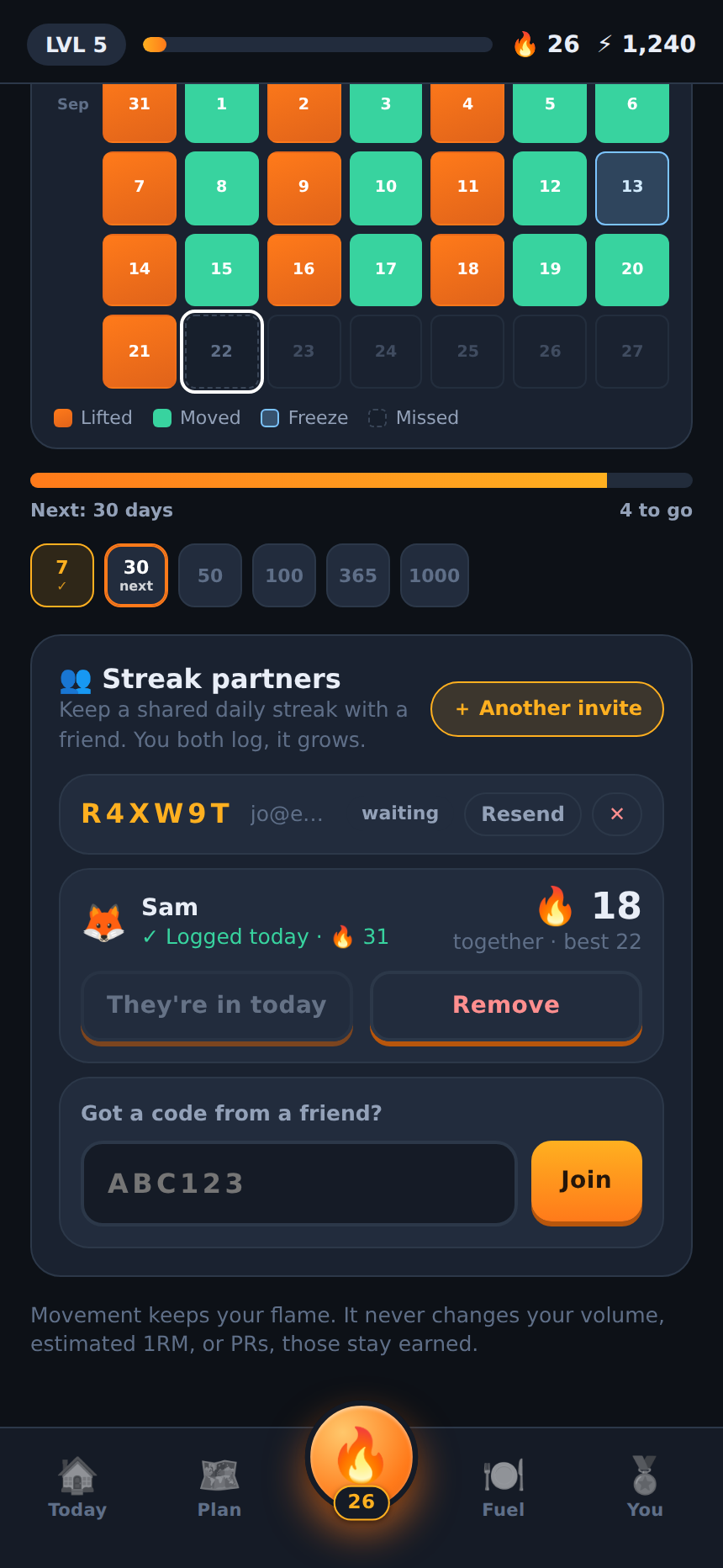
Enough to train on for real, free and forever: log every workout, a safe starting plan that works
around the joints you tell it about, your daily streak, a streak partner, badges and levels, your
training synced across every device you sign in on, and full CSV/JSON export, no ads, no session
limits, and nothing you log is ever deleted. The joint
filtering is free and always will be; it works around what you tell it, and it's not
medical advice.
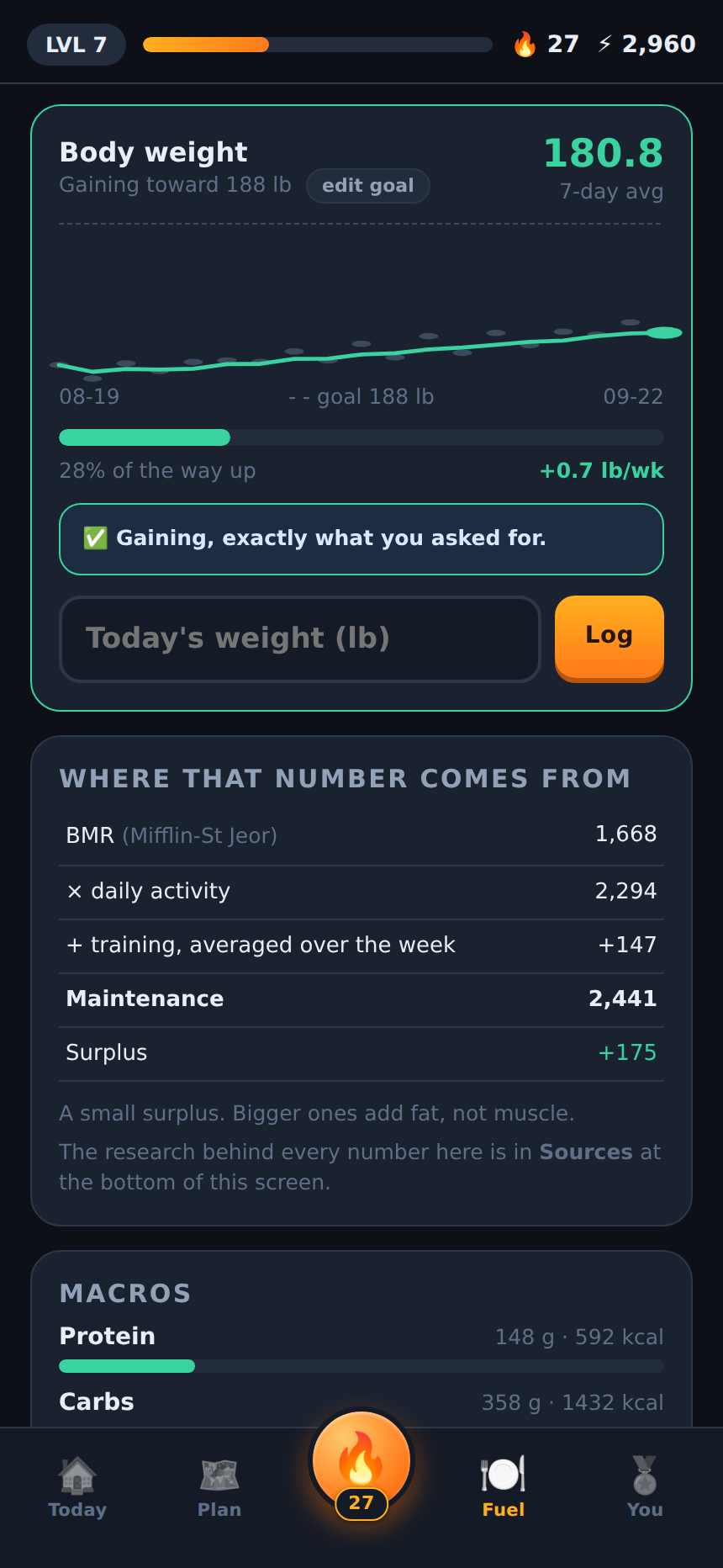
Pro is the coach in full: the daily check-in that reshapes today's session when you say
"shoulder's cranky and I slept badly"; progression that keeps moving the weight as you earn it;
unlimited swaps and the whole 267-movement library; up to three programs of your own, built move by move and still coached around your joints; every training environment, switched mid-week
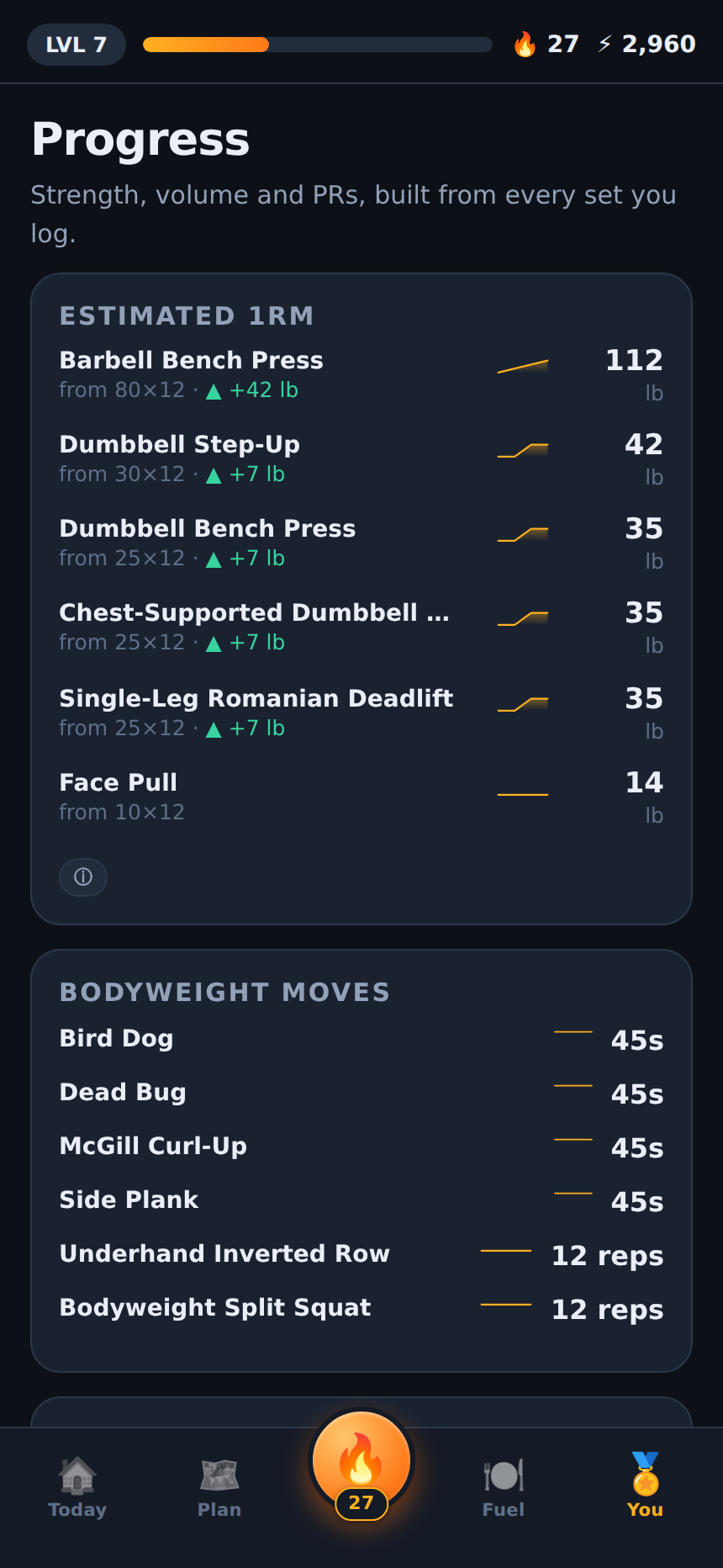
with your weights carried; the progress screen that proves you're getting stronger: 1RM, PRs, your
whole story across every block. $4.99/mo or
$29.99/yr, free for 7 days.
Do I need equipment?
No. Bodyweight-only is a first-class option, as are bands-only and dumbbells-only. Hotel gyms
are specifically handled, because that's where most plans quietly fall apart.
What happens to my data?
It lives on your phone. If you sign in, it syncs to a private database where only your own
account can read your rows. Your joint and back settings are health information and never appear
anywhere another person can see. A streak partner sees exactly three things: whether you logged
today, your flame, and the streak you share. The app has no ad network and no third-party
analytics. On the web it counts which steps people reach, like finishing setup or starting a
workout, so we can see where it confuses people; those counts carry no account, email or
training data, and the iPhone app sends none. (This marketing page uses ordinary Google
Analytics to count visits, like nearly every website.)
I already use Strong or Hevy. Do I lose my history?
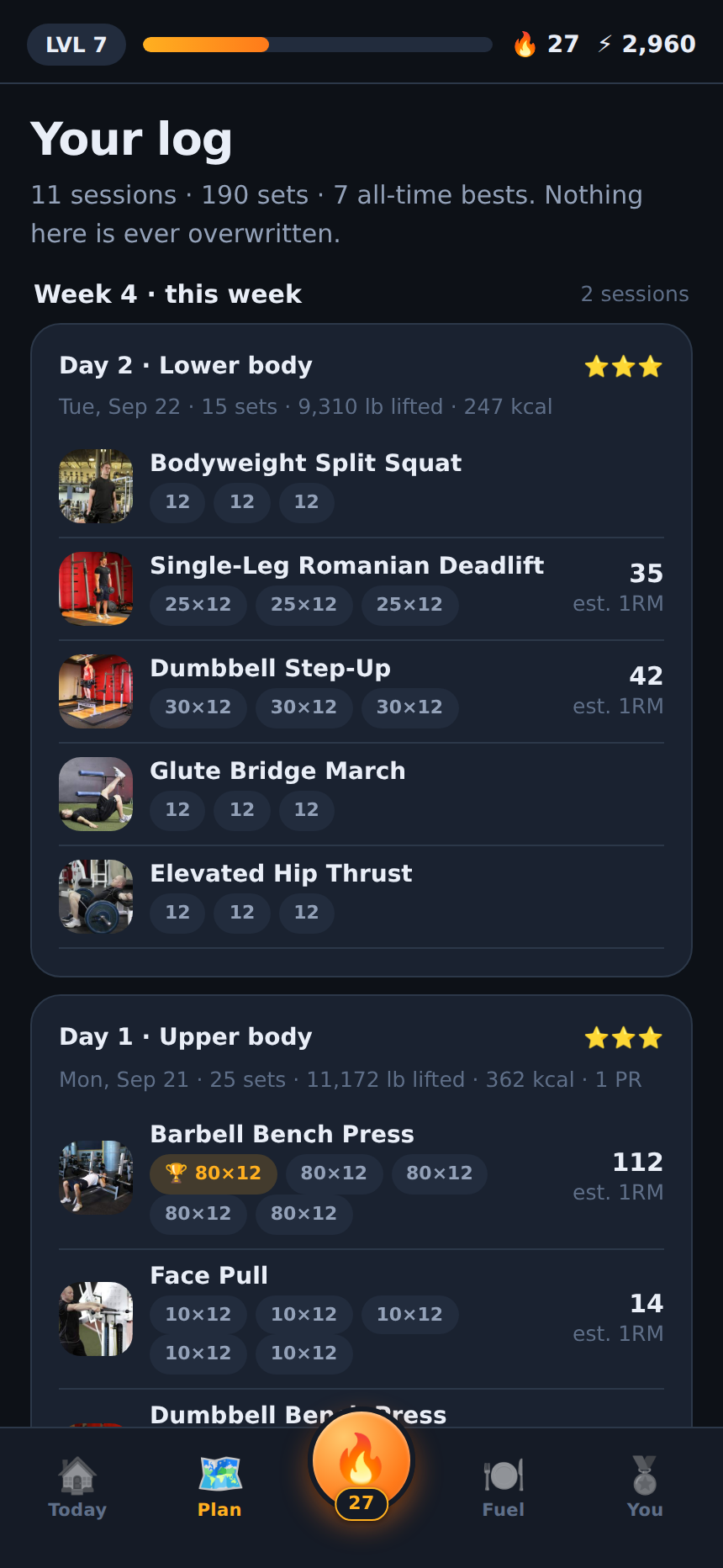
No. Export a CSV from either app and Liftspan reads it: your sessions land in your log, and
your working weights seed the plan, never above what you've actually lifted. A movement it
can't match with certainty is shown to you for review, not silently guessed at, and anything
it doesn't carry stays in your log under its own name.
It works the other way too: your whole log exports back out in Strong's and Hevy's own
formats. If you ever want to leave, the door is on the export screen, not hidden in a
support ticket. The only things that don't transfer in are XP, levels and streaks, those are
earned here, because a streak built on imported numbers would be fiction.
Who's building it?
One person, still lifting, tired of apps that assume otherwise. Which is also why it gets
fixed fast when something's wrong. More about why I built it.